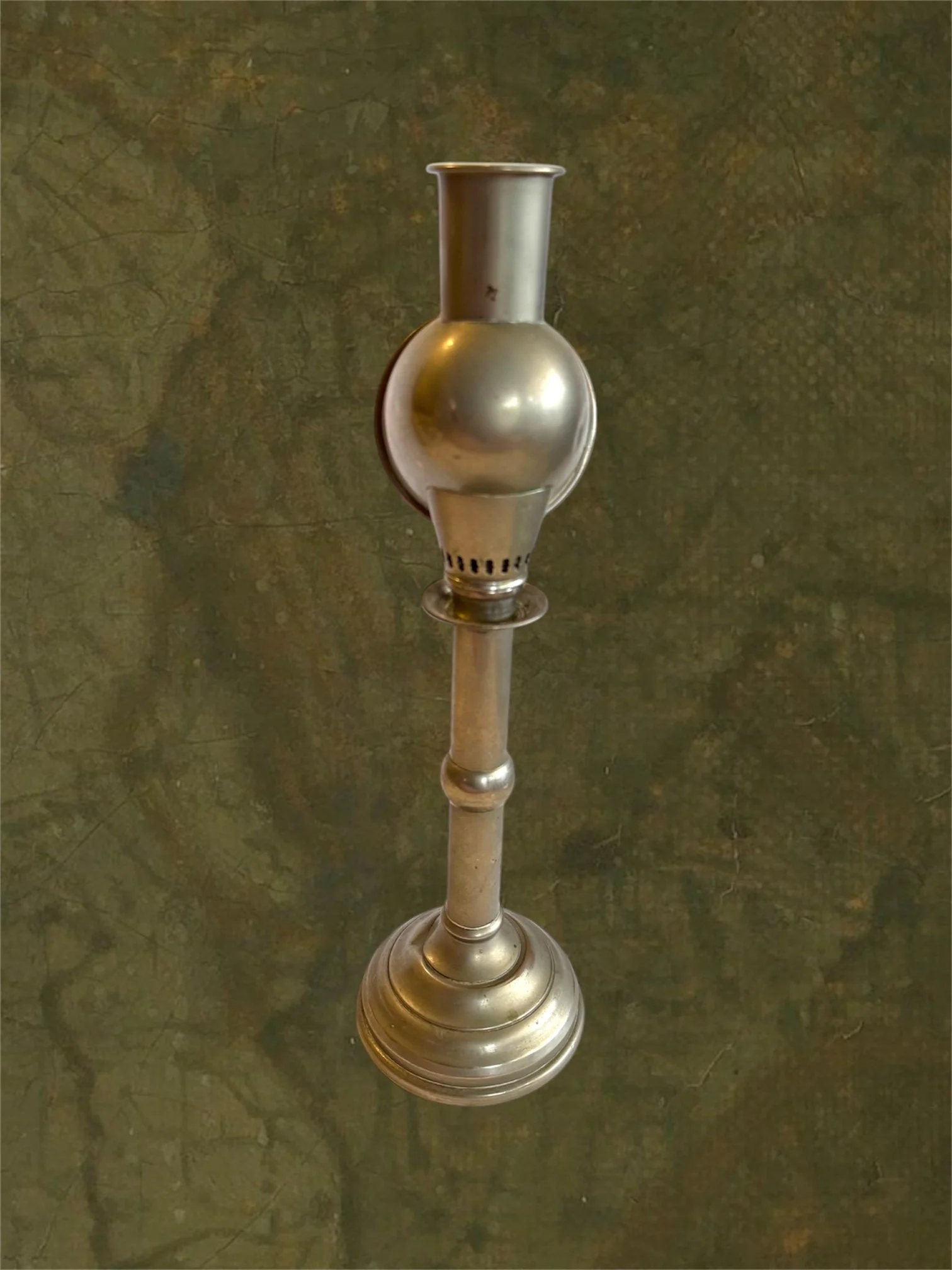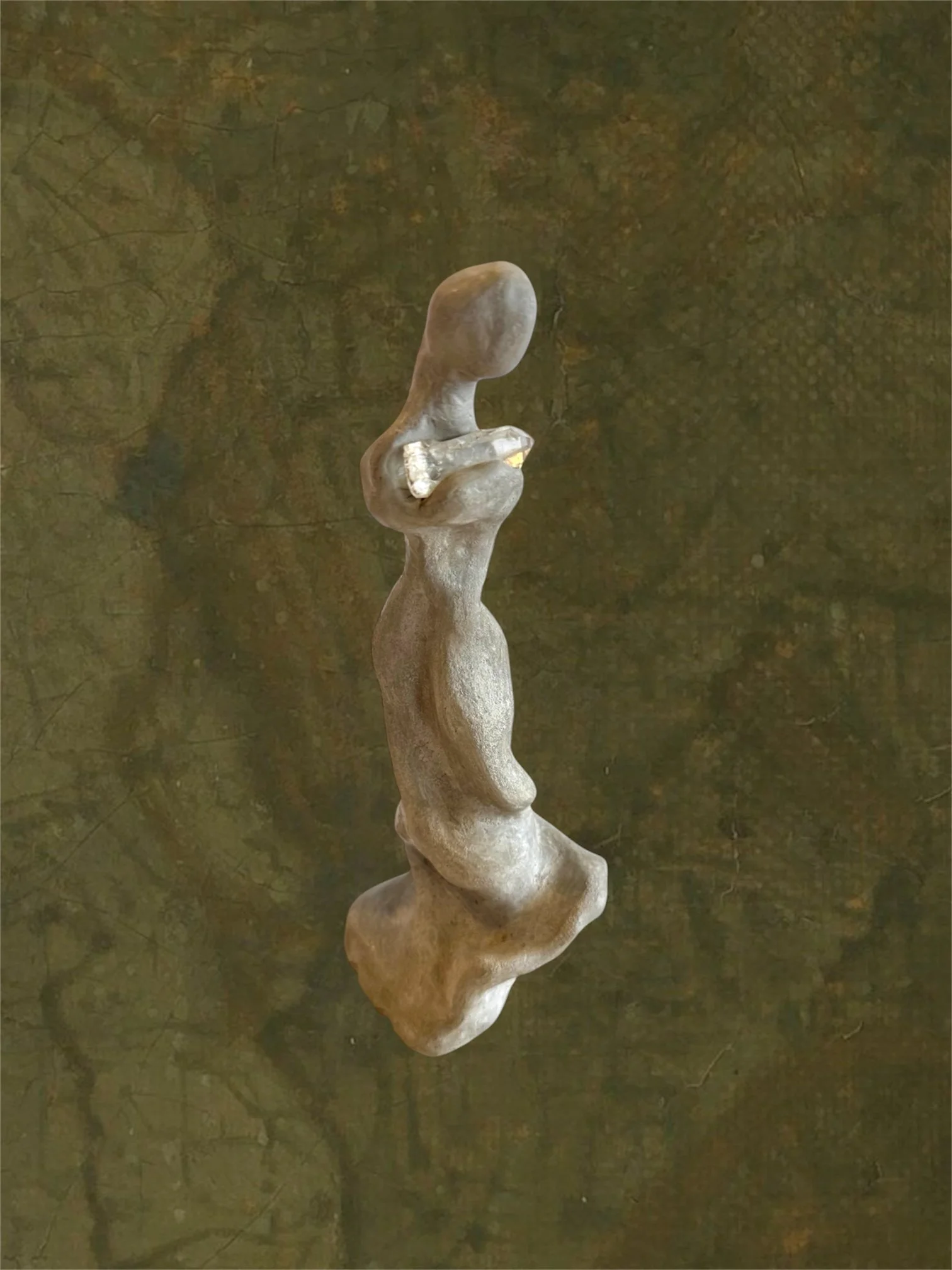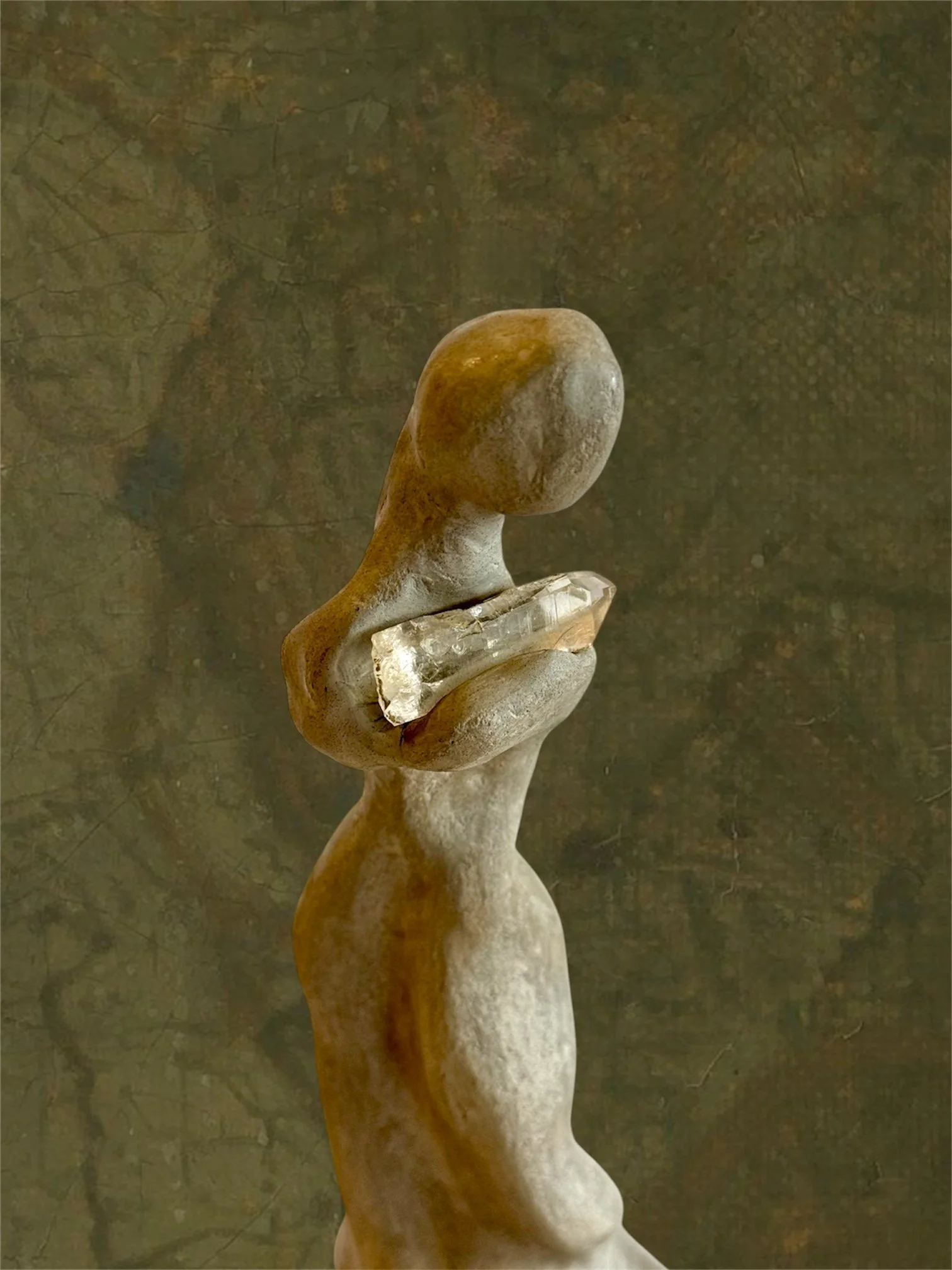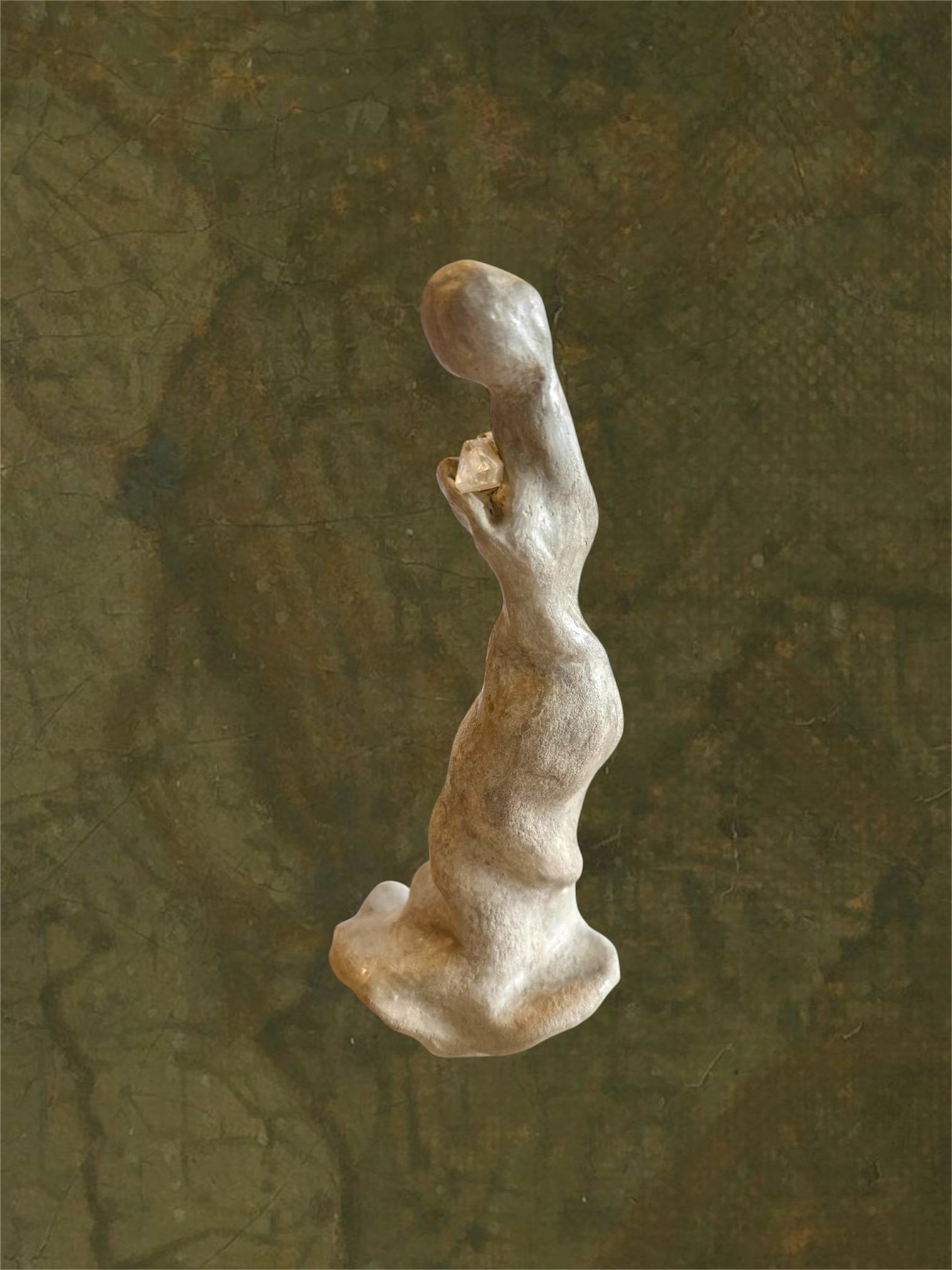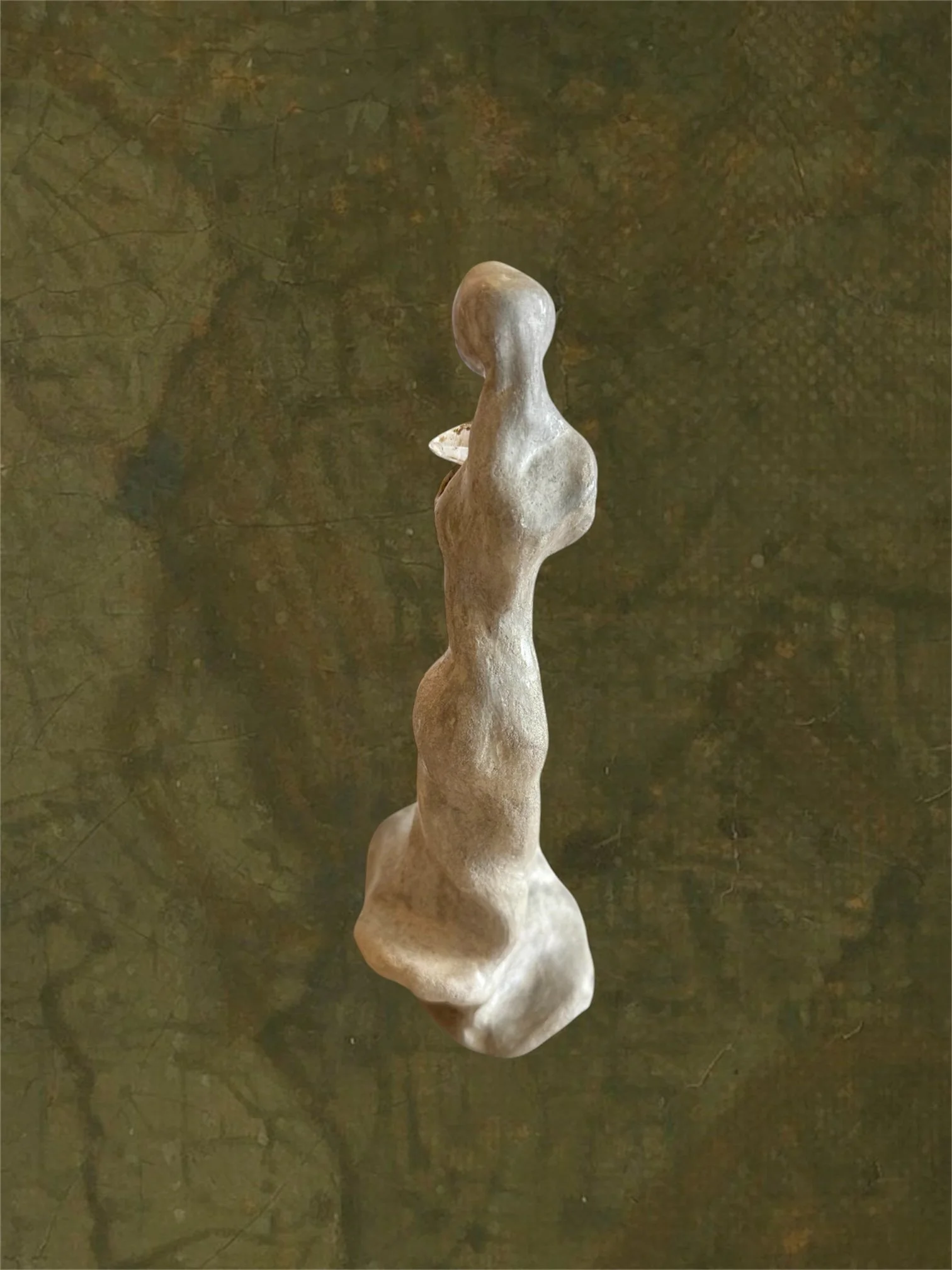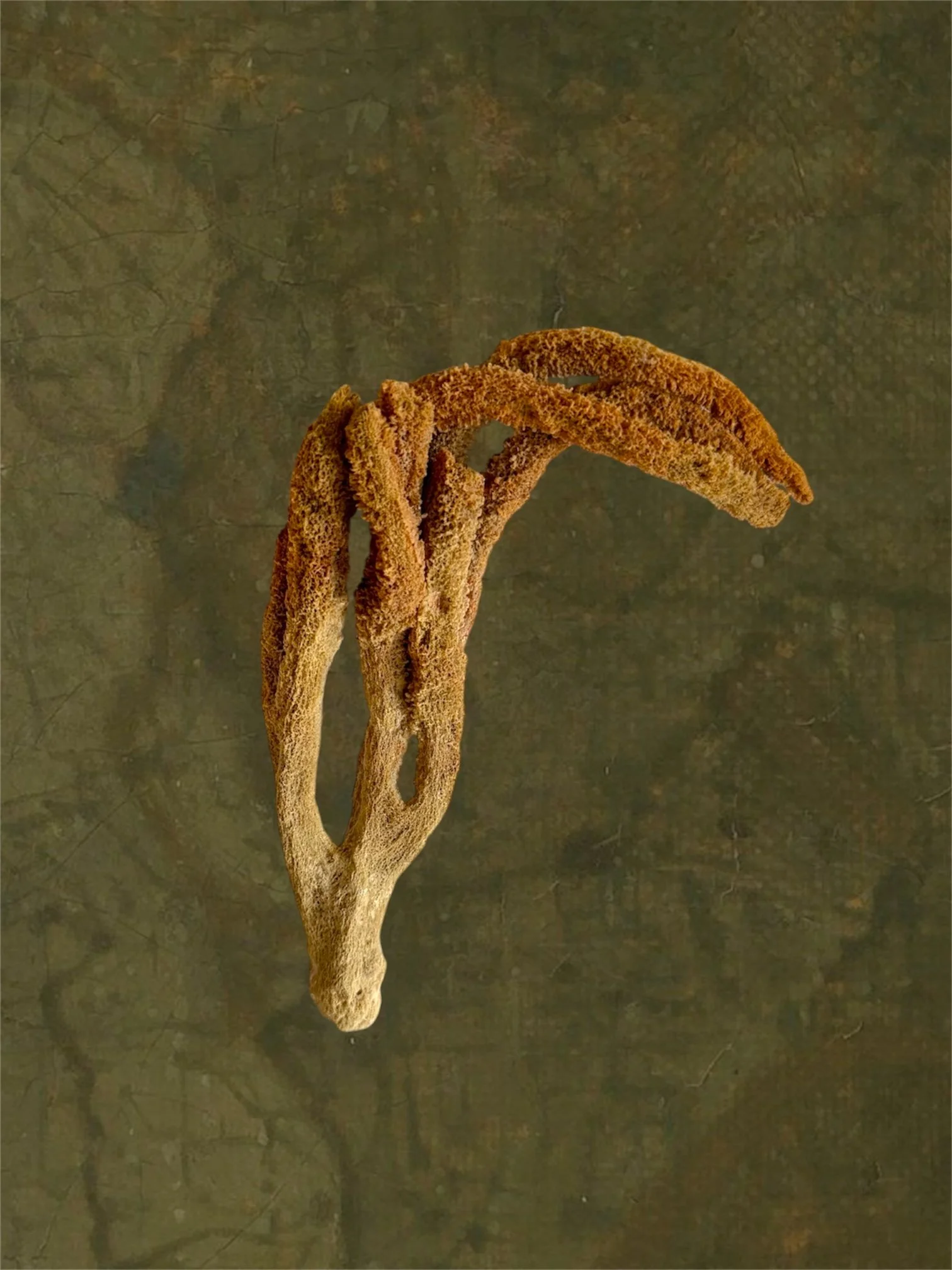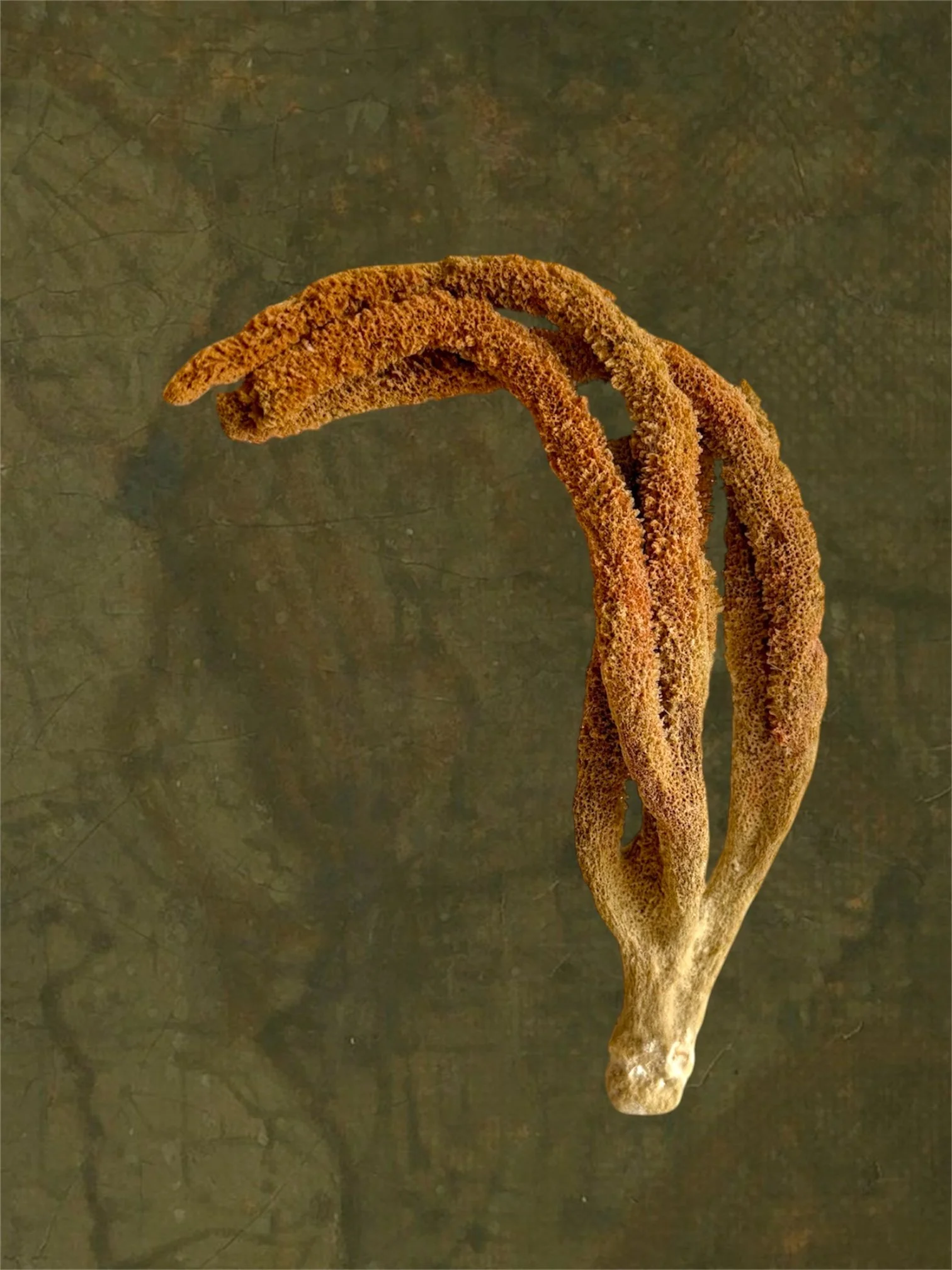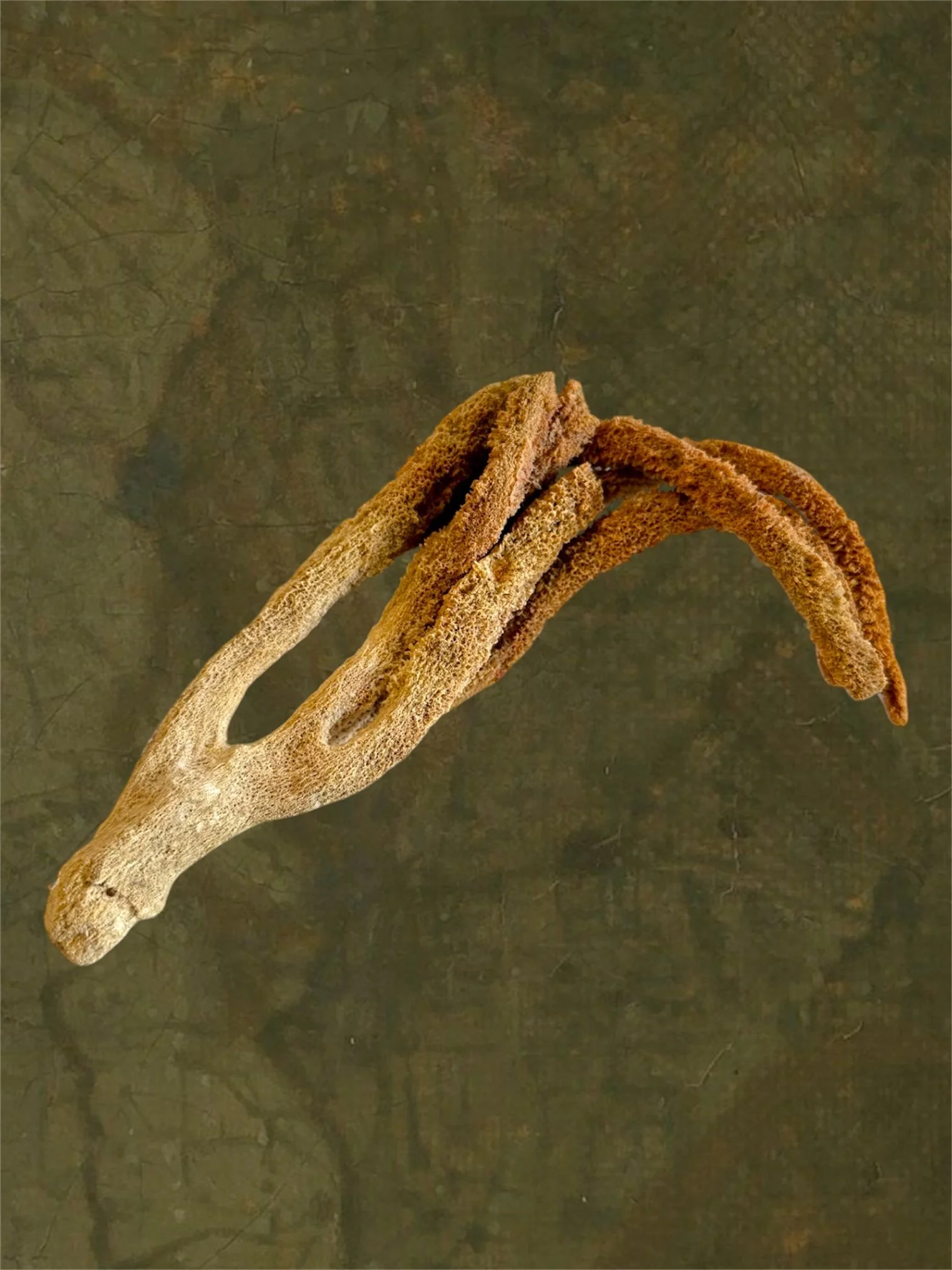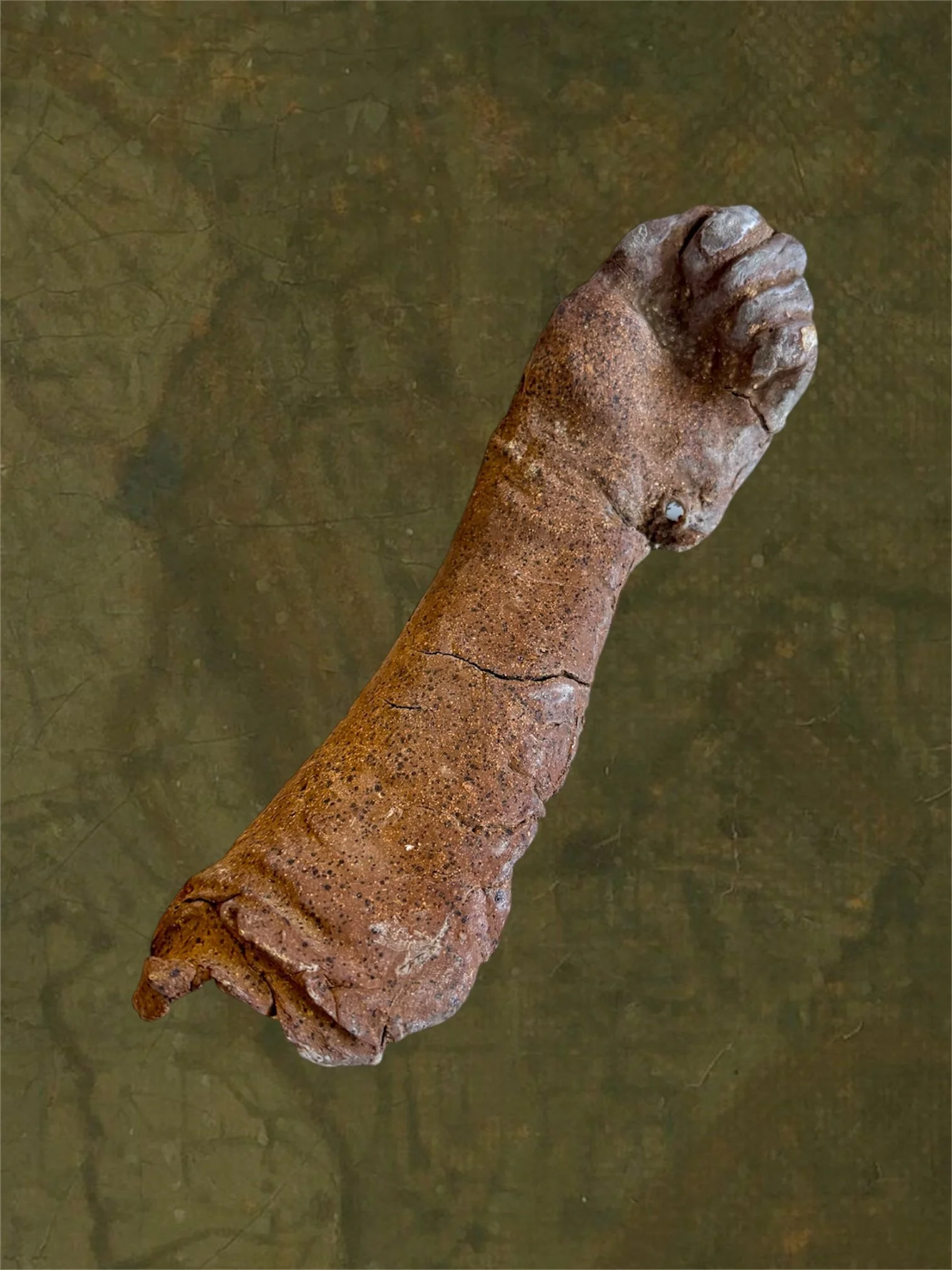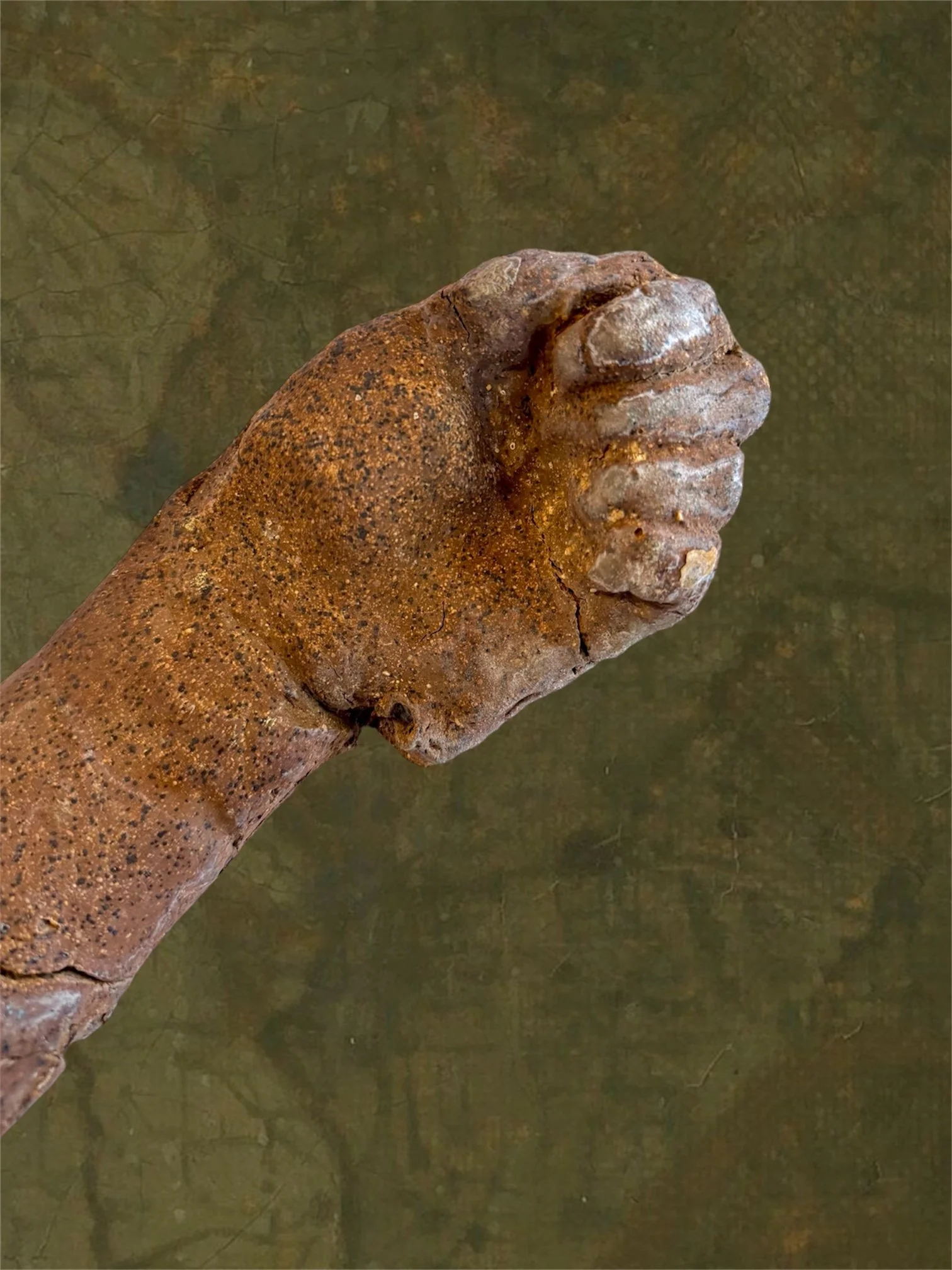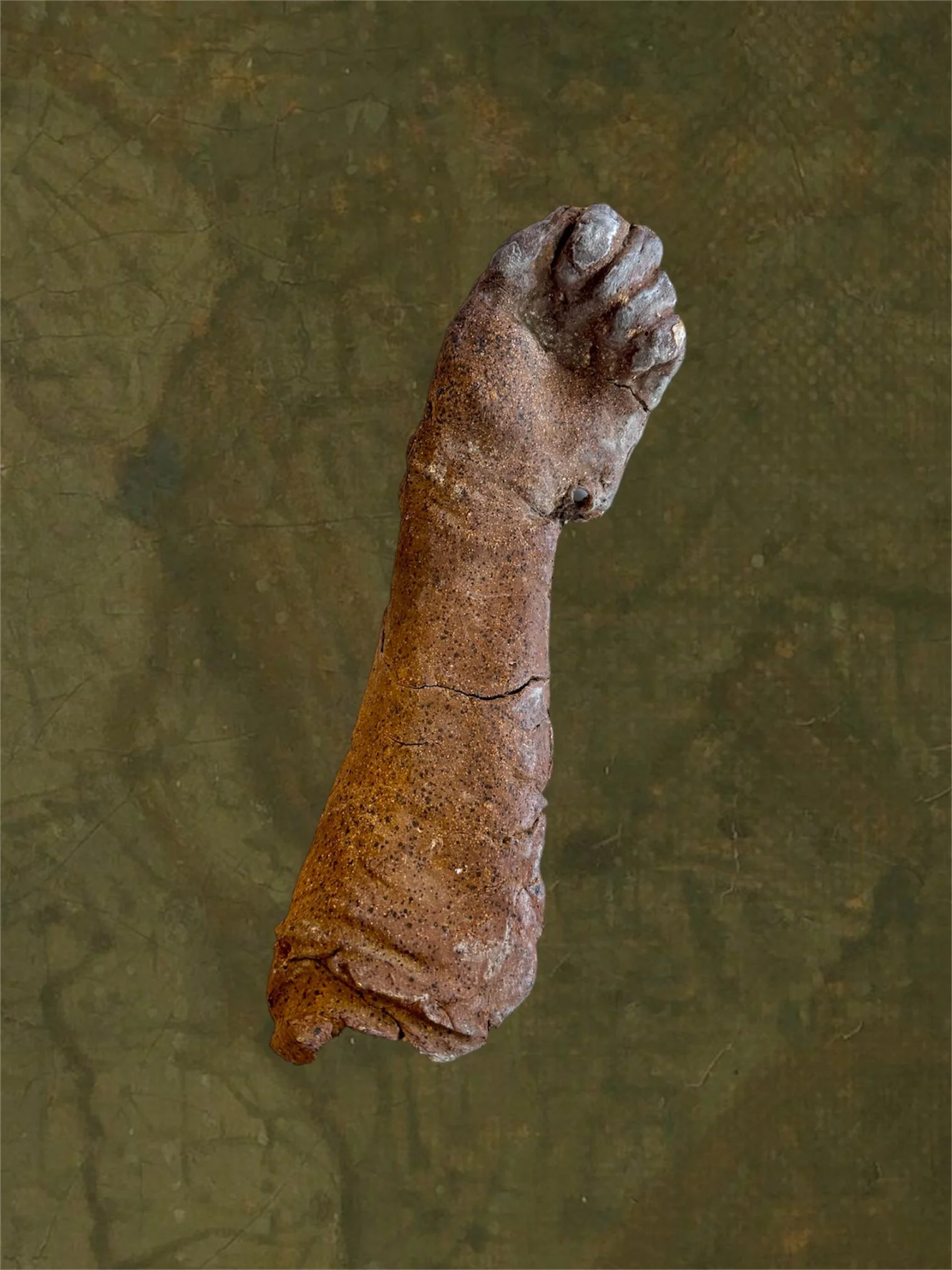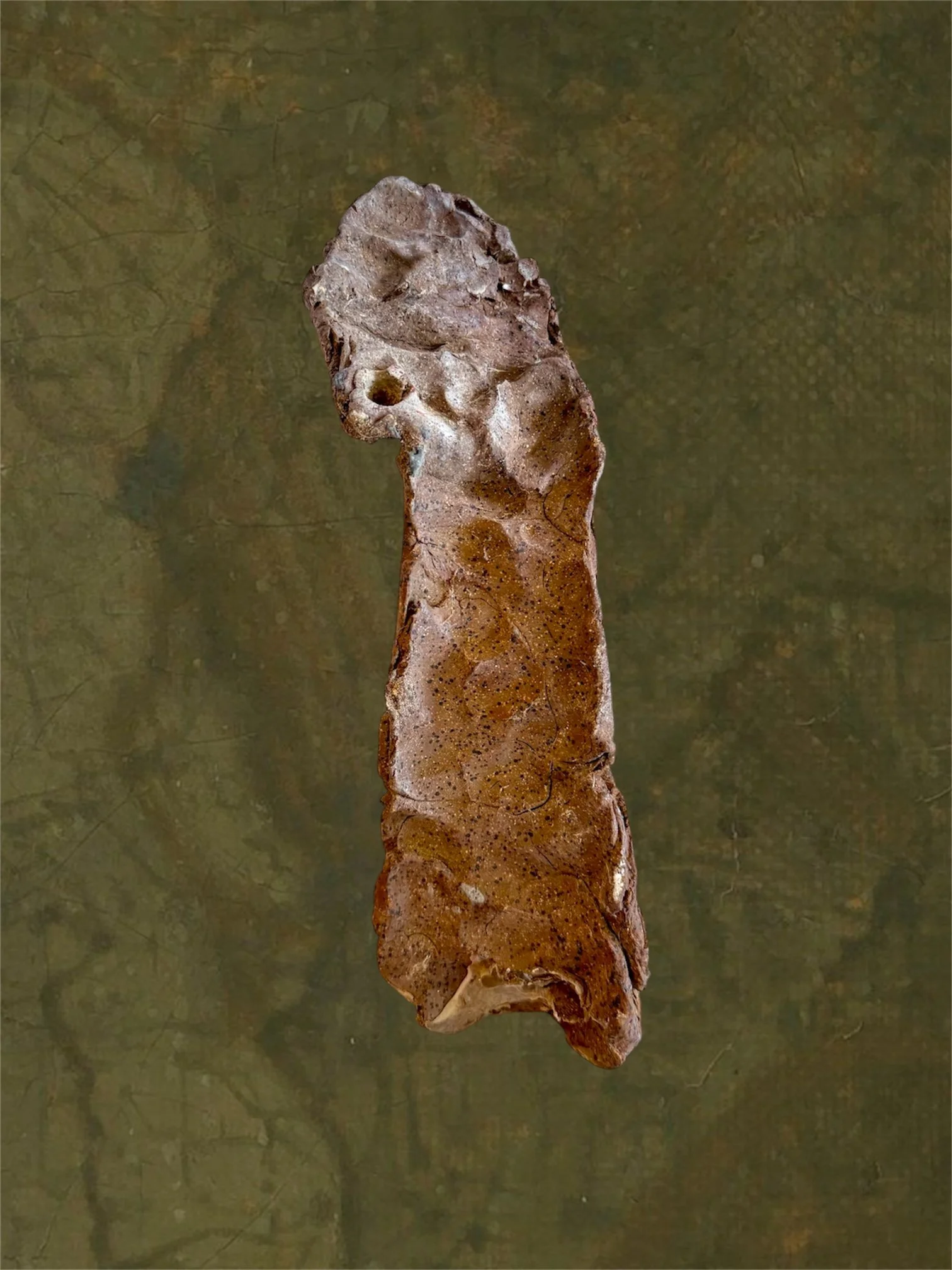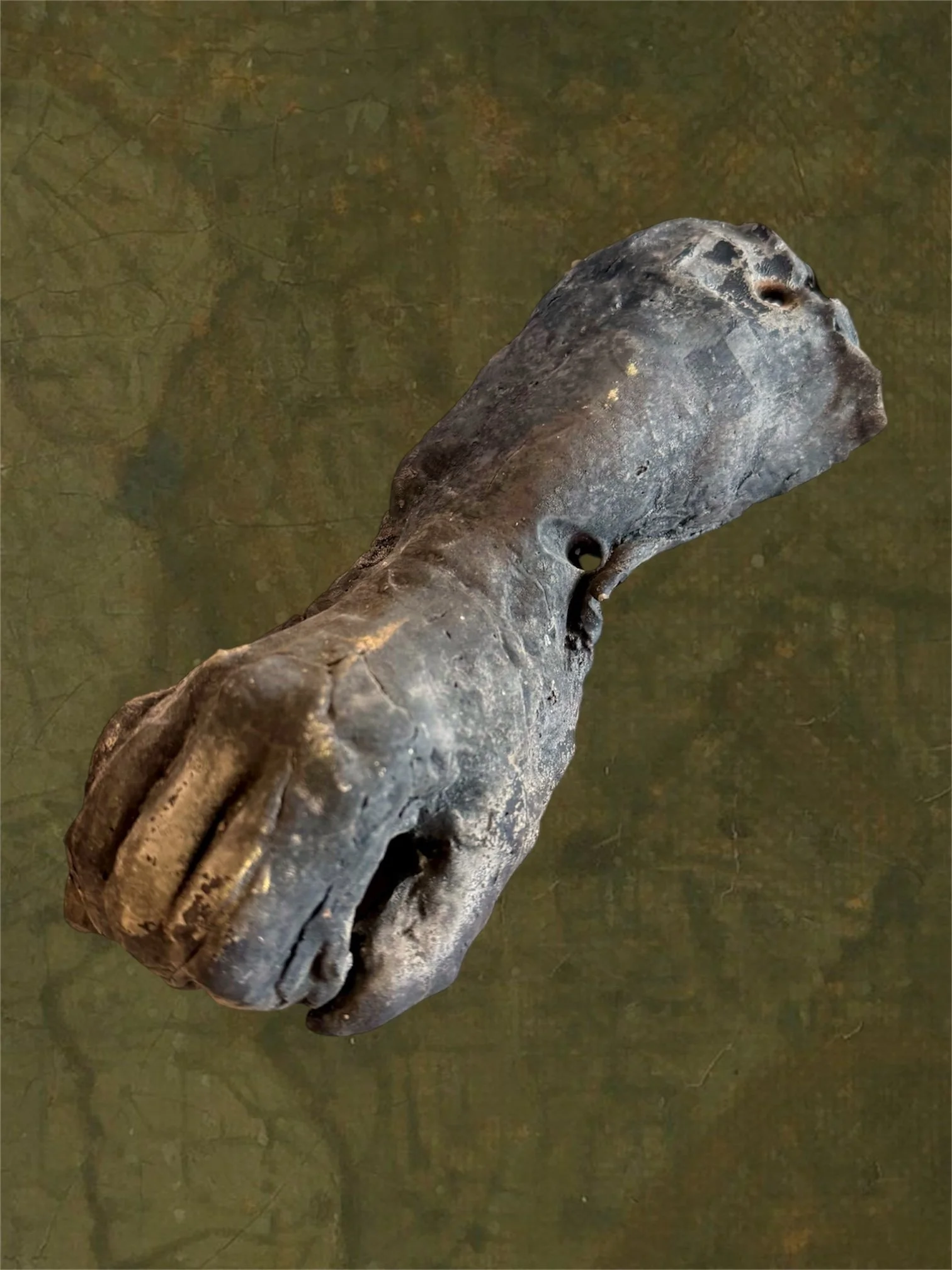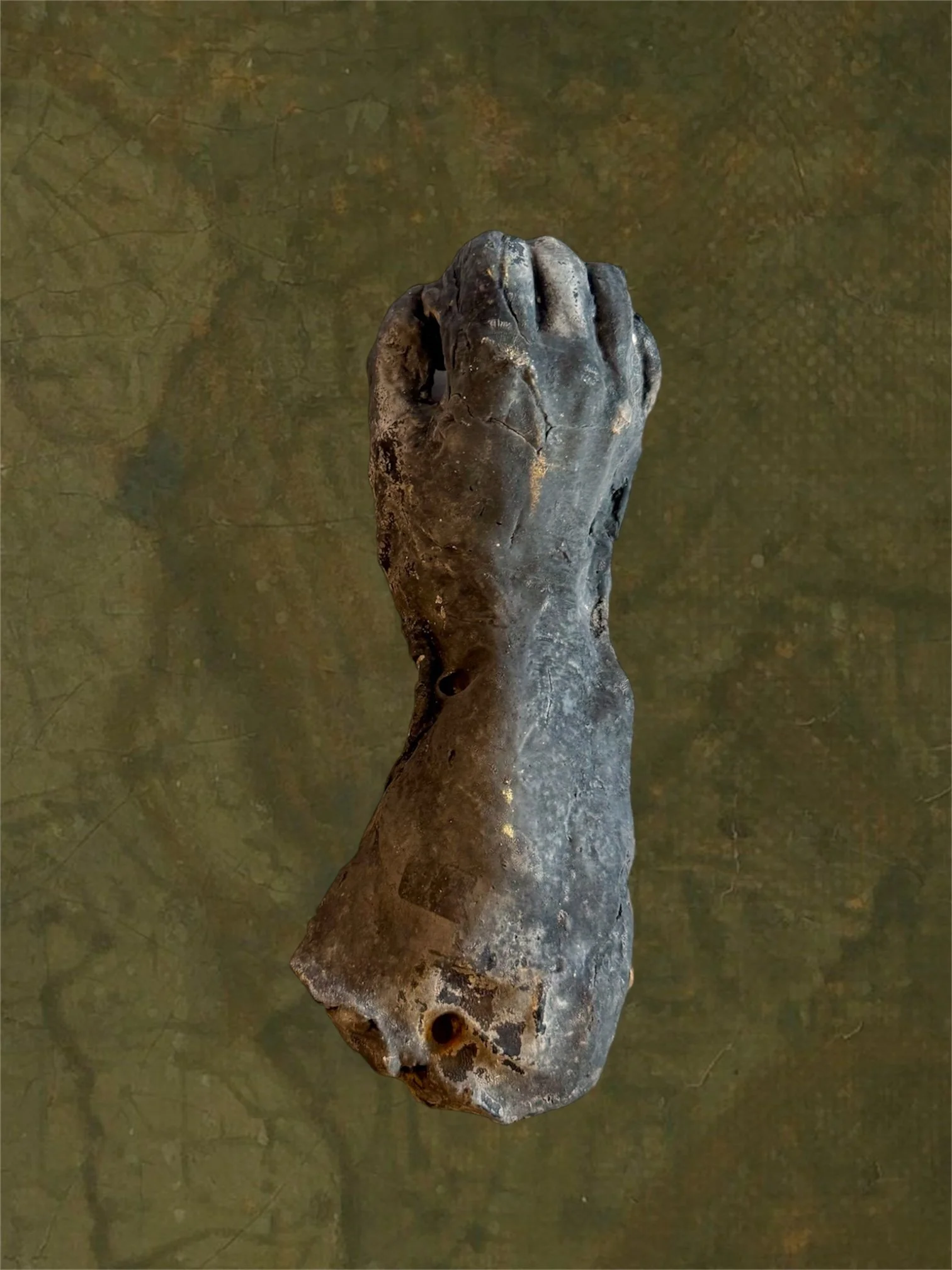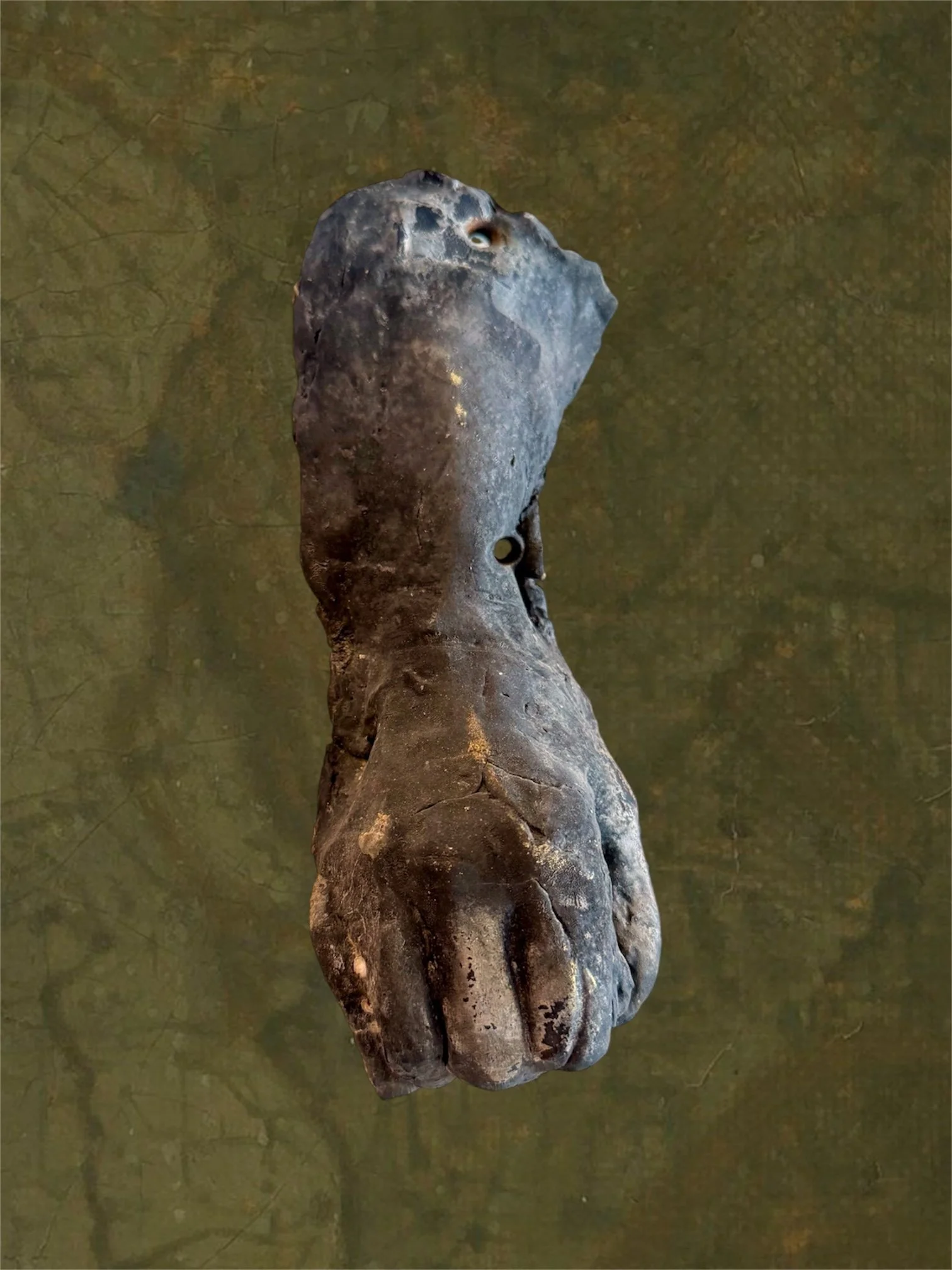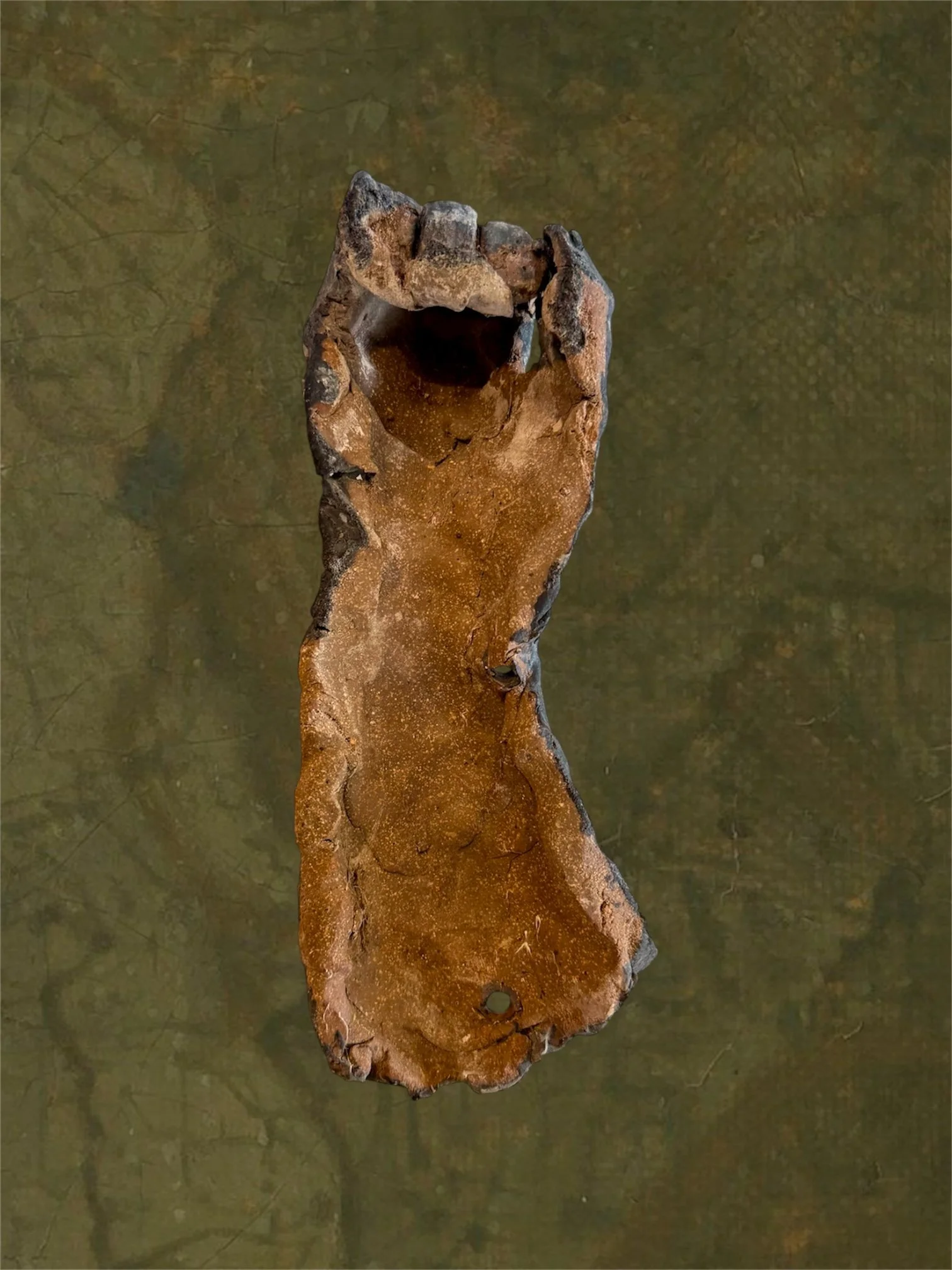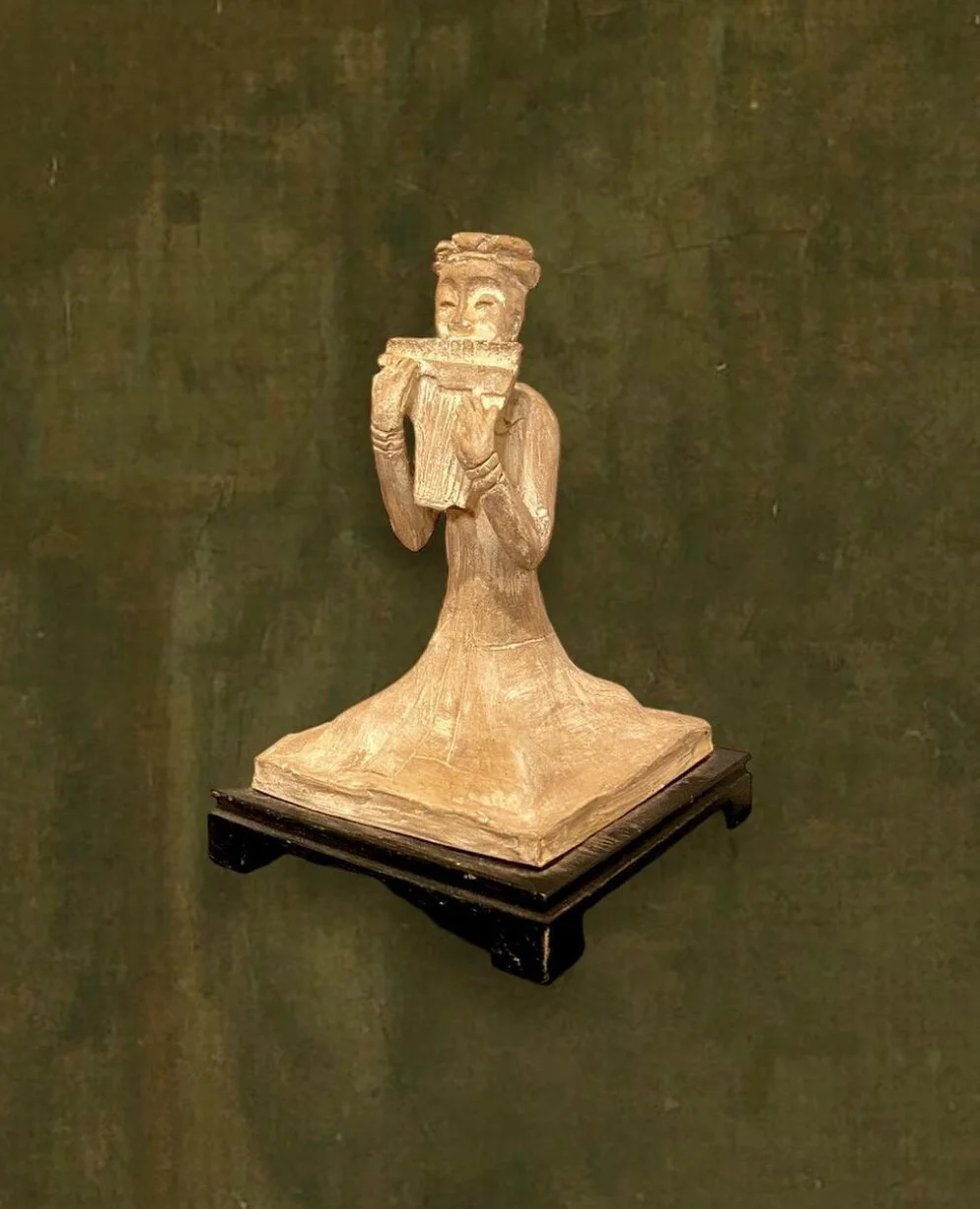
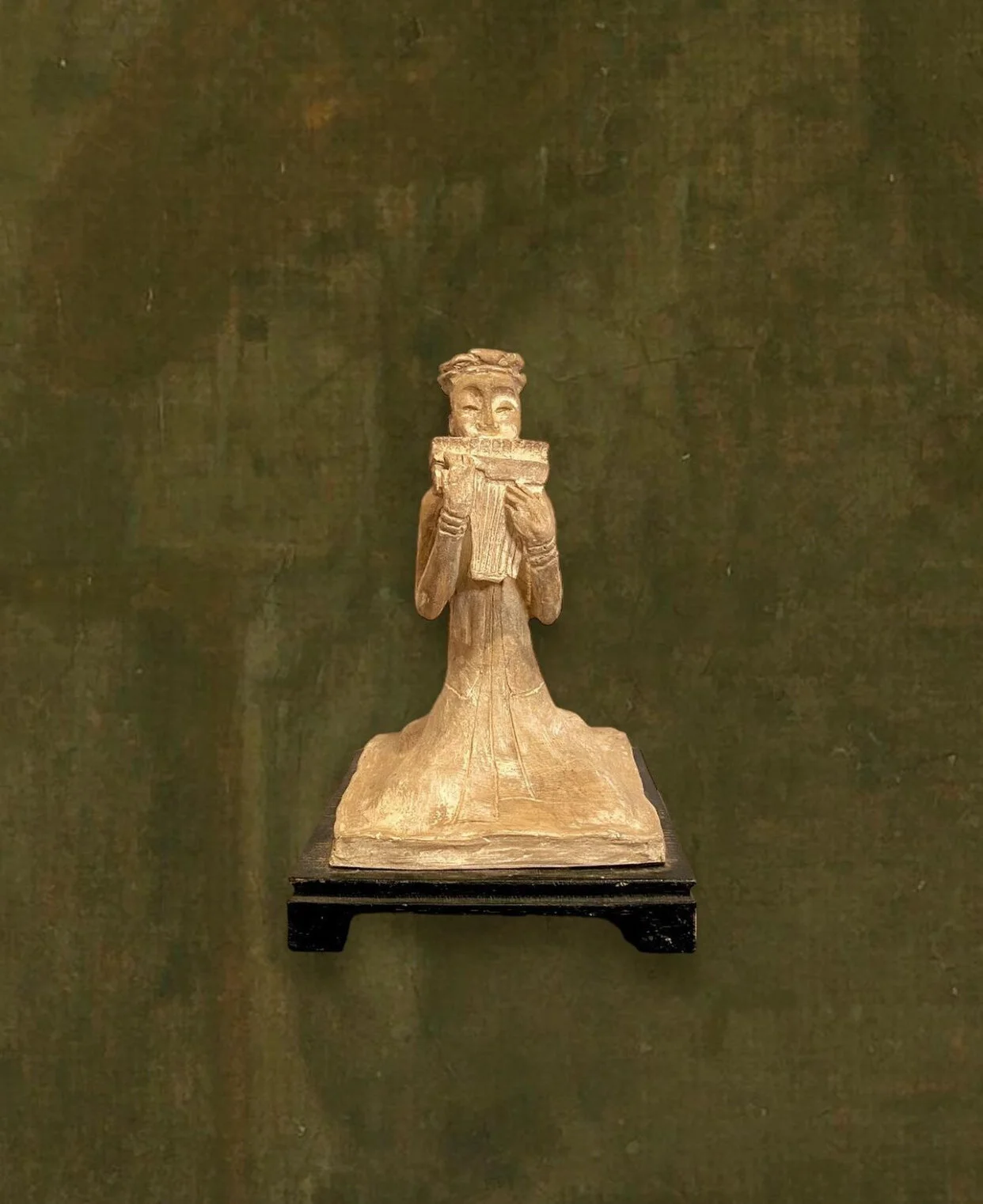
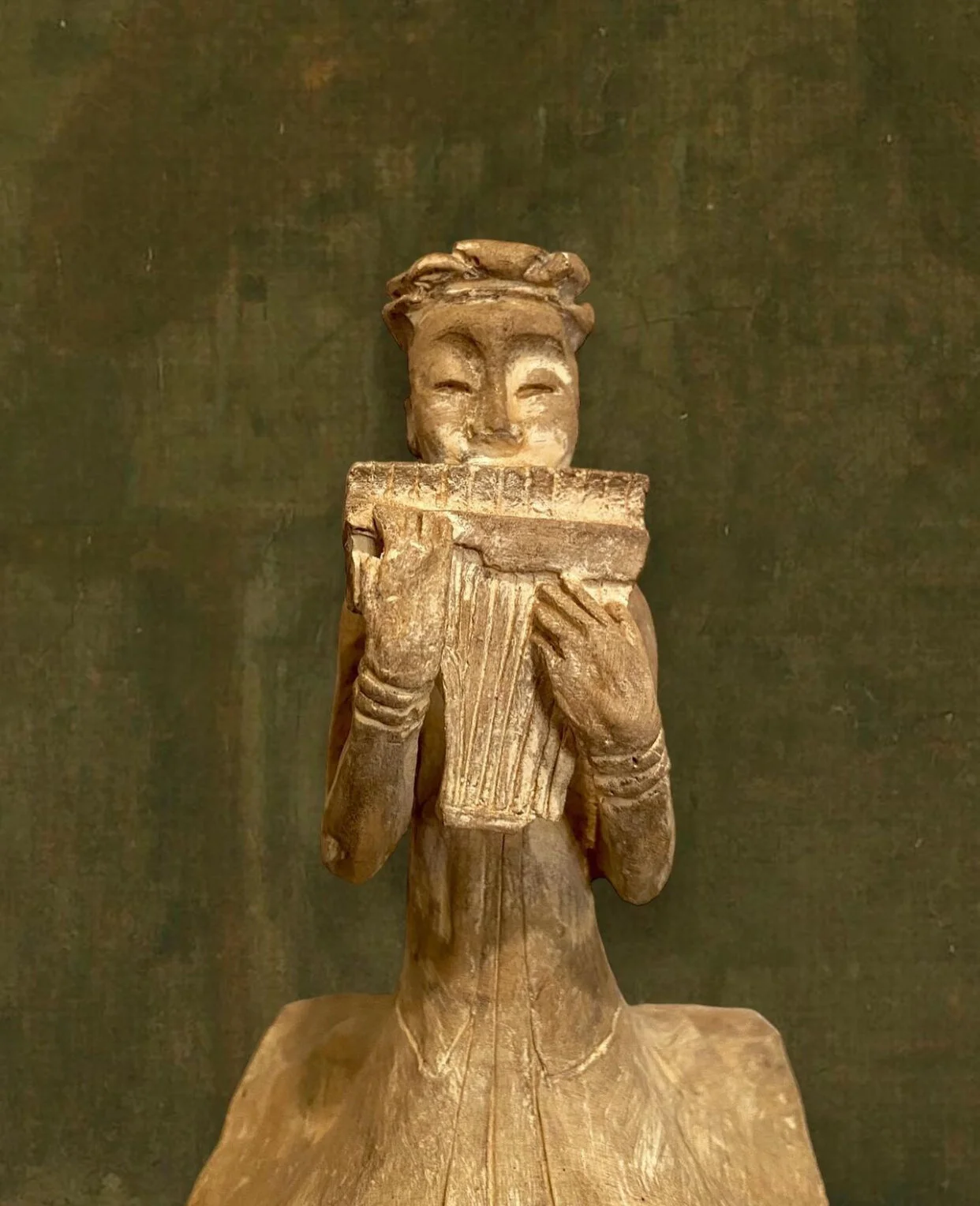
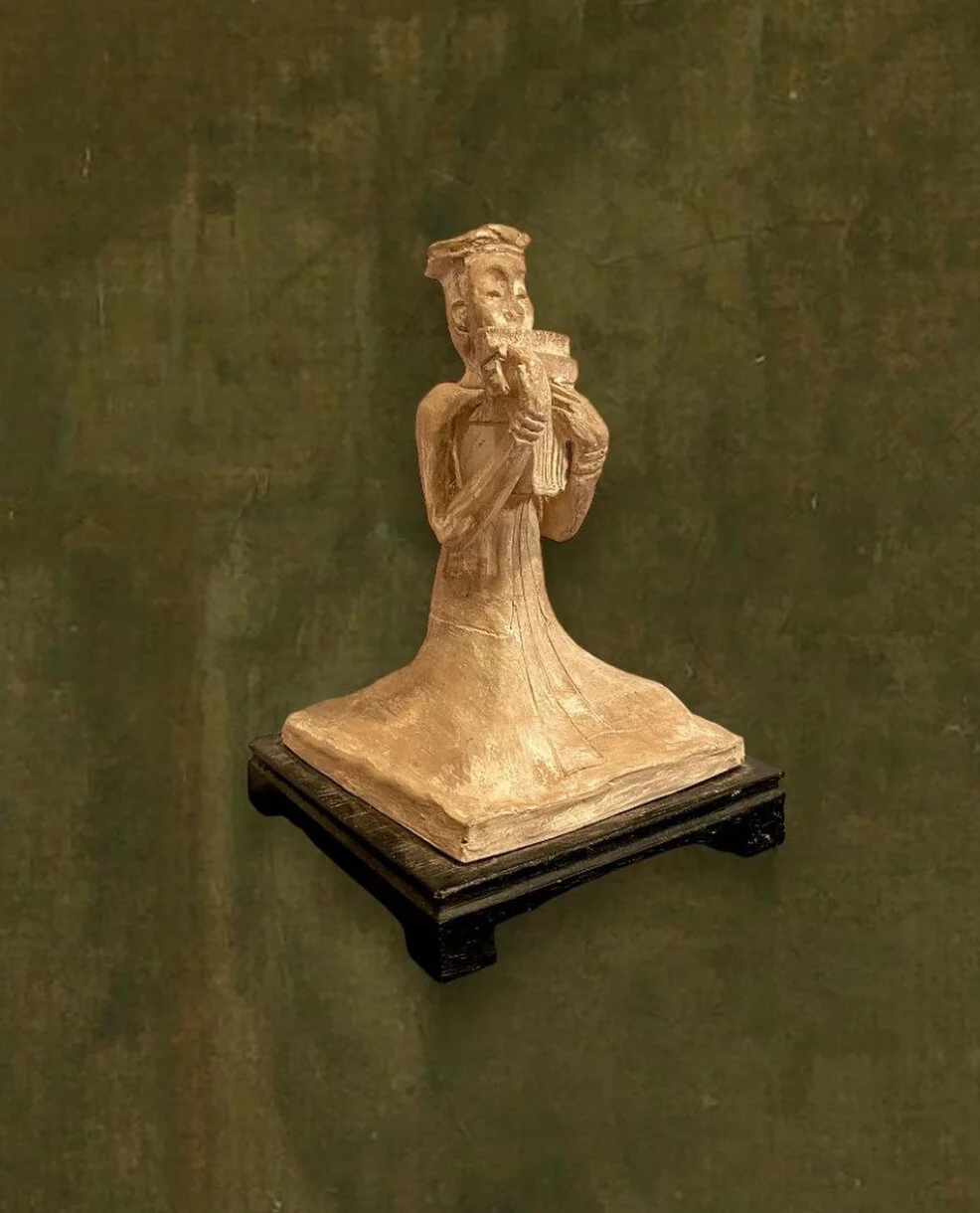
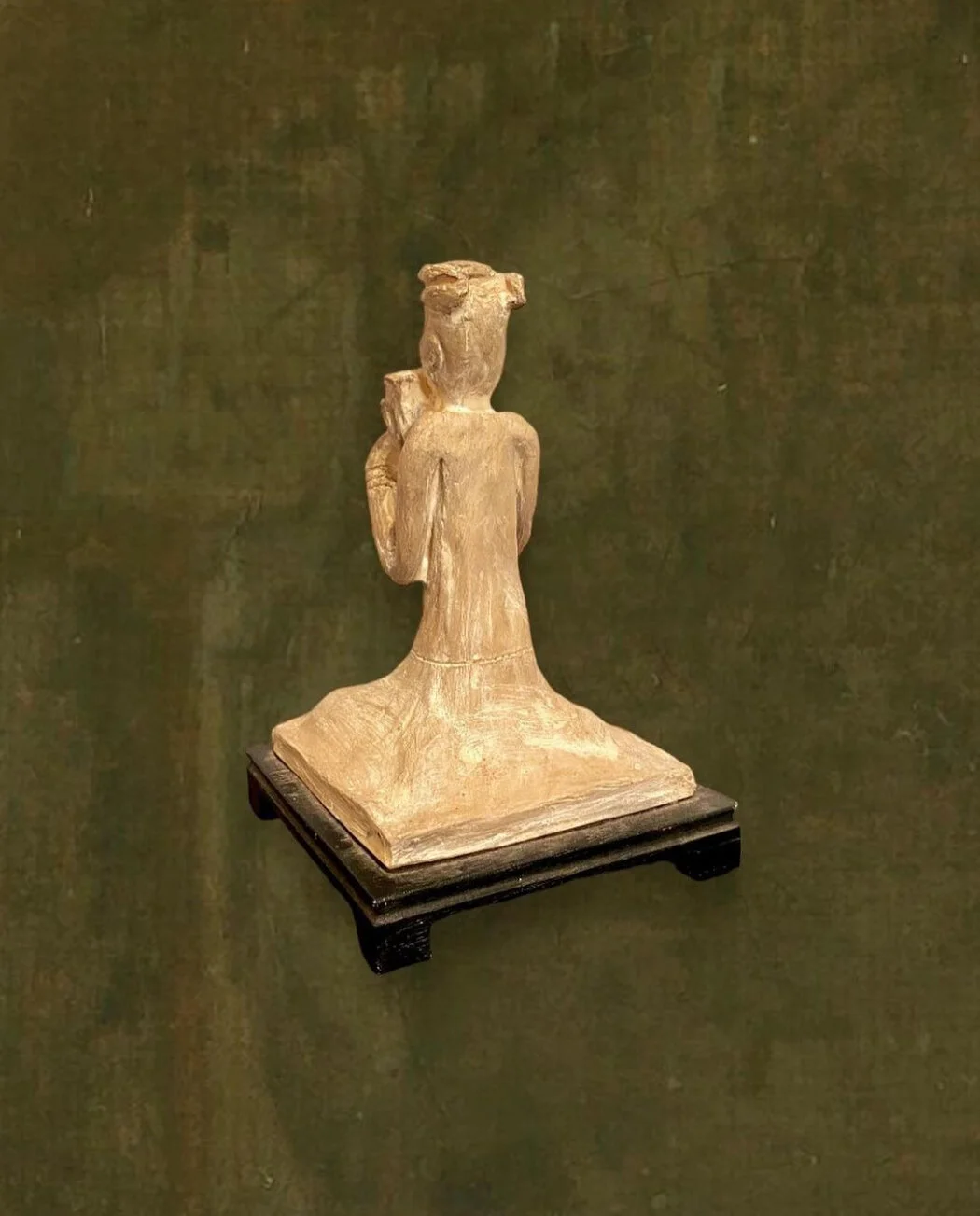
this is a vintage clay or possibly plaster hand carved figure playing the sheng wind instrument on wooden platform base.
approx: 5.5" x 5.5" x 8"
A little history below...
According to Chinese legend, the goddess Nu Wa, who created humans out of mud, invented the sheng. The Book of Documents and The Classic of Poetry contain the earliest written records of the sheng. During the Pre-Qin Period (pre-221 BC), sheng was the major wind instrument played in China.
However, after the rise in popularity of plucked stringed instruments, the popularity of the sheng declined and it became an accompaniment instrument in Chinese orchestras.
After the founding of the People's Republic of China in 1949, the development of the sheng began to take an upward turn. A number of music schools included sheng playing as part of their curriculums and generations of exceptional sheng players emerged to meet the demands of the new era.
The sheng is deemed to be the inspiration for freereed instruments outside China. It spread to West Asia during the Northern Dynasty (386-581) and the Tang Dynasty
(618-907), and then appeared in Europe around the 17th century. The organ, accordion and harmonica are all descendants of the sheng.
this is a vintage clay or possibly plaster hand carved figure playing the sheng wind instrument on wooden platform base.
approx: 5.5" x 5.5" x 8"
A little history below...
According to Chinese legend, the goddess Nu Wa, who created humans out of mud, invented the sheng. The Book of Documents and The Classic of Poetry contain the earliest written records of the sheng. During the Pre-Qin Period (pre-221 BC), sheng was the major wind instrument played in China.
However, after the rise in popularity of plucked stringed instruments, the popularity of the sheng declined and it became an accompaniment instrument in Chinese orchestras.
After the founding of the People's Republic of China in 1949, the development of the sheng began to take an upward turn. A number of music schools included sheng playing as part of their curriculums and generations of exceptional sheng players emerged to meet the demands of the new era.
The sheng is deemed to be the inspiration for freereed instruments outside China. It spread to West Asia during the Northern Dynasty (386-581) and the Tang Dynasty
(618-907), and then appeared in Europe around the 17th century. The organ, accordion and harmonica are all descendants of the sheng.